Image · Public domain via Wikimedia Commons
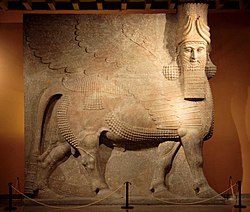
Lamassu of Khorsabad
Unknown Assyrian sculptors · c. 713–706 BC
About this masterpiece
These colossal winged bulls with human heads stood guard at the gates of the Assyrian palace of King Sargon II at Dur-Sharrukin (modern Khorsabad, Iraq). Carved with five legs so that the figure appears to be standing still when viewed from the front and walking when viewed from the side, each lamassu was a protective spirit warding off evil from the royal residence.
Historical significance
Excavated by the French consul Paul-Émile Botta in the 1840s during the first archaeological digs in northern Iraq, the lamassu are key works in the Louvre’s celebrated Cour Khorsabad. Following the destruction of Khorsabad’s remaining sculptures by ISIS in 2015, the Louvre’s examples are among the few that survive.