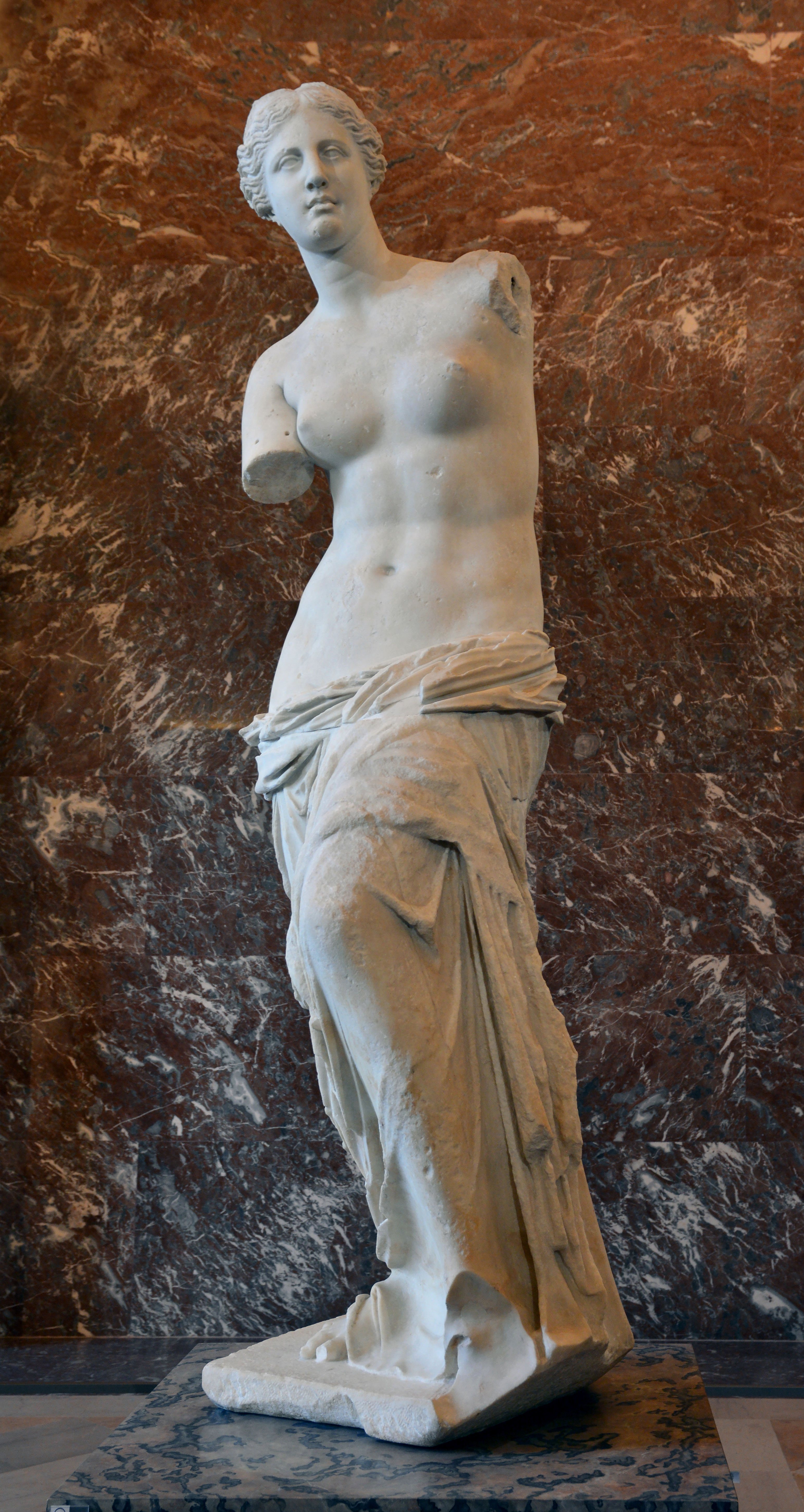
Image · Public domain via Wikimedia Commons
Code of Hammurabi
Unknown Babylonian sculptor · c. 1754 BC
About this masterpiece
A black basalt stele standing more than two meters high, the Code of Hammurabi preserves one of the earliest and most complete written legal codes from human history. At the top, a relief shows Hammurabi, sixth king of the First Babylonian Dynasty, receiving the laws from the seated sun god Shamash. Below, in cuneiform script, are 282 laws covering trade, family, slavery and personal injury.
Historical significance
Discovered in 1901 at the ancient city of Susa (in modern Iran) by a French archaeological mission, the stele provides invaluable insight into Mesopotamian society and the principle of “eye for an eye” justice. It is one of the cornerstones of the Louvre’s Department of Near Eastern Antiquities.