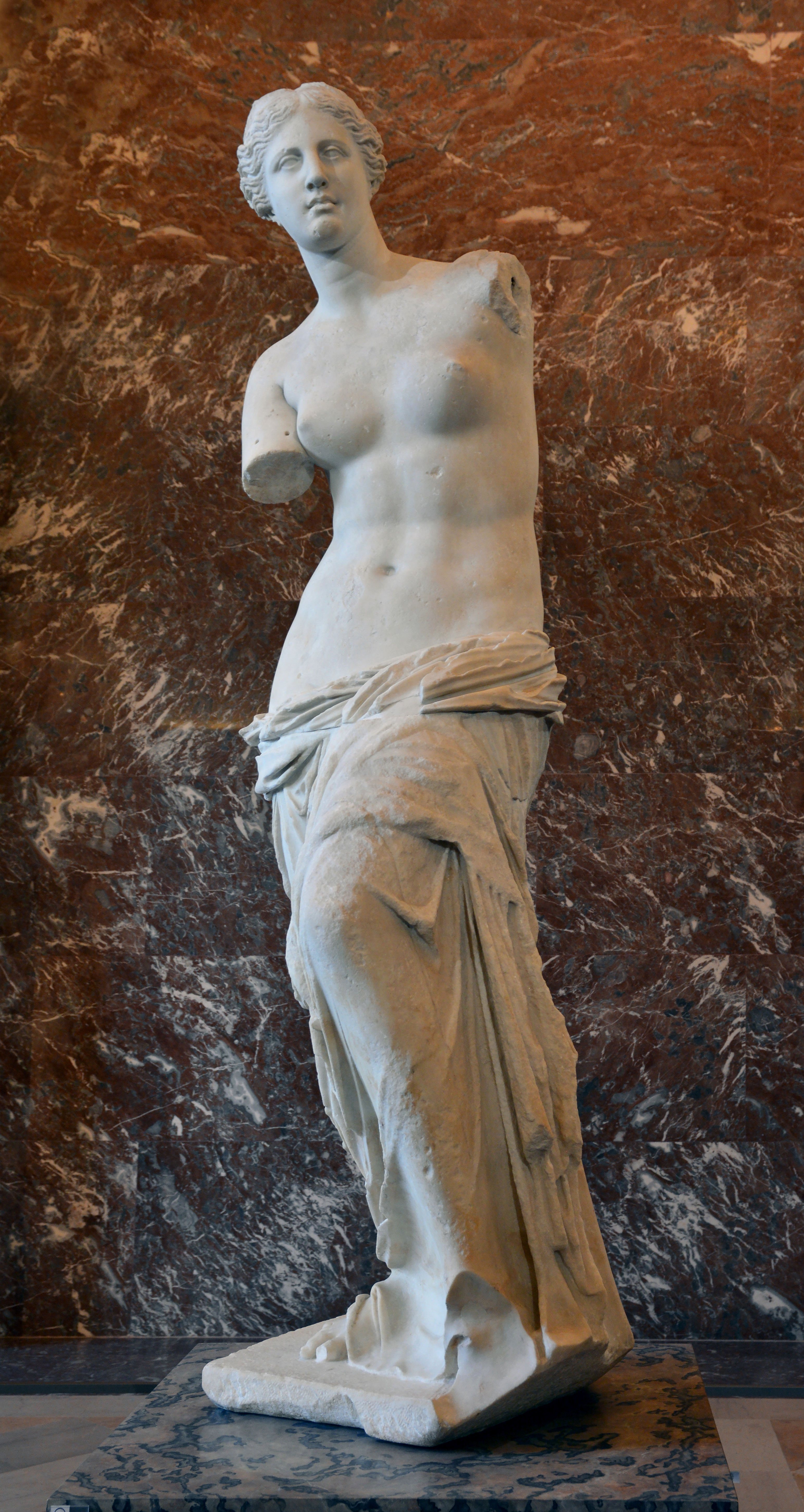
Image · Public domain via Wikimedia Commons
Ancient · Sculpture
The Borghese Gladiator
Agasias of Ephesus · c. 100 BC
ArtistAgasias of Ephesus
Datec. 100 BC
TypeSculpture
MediumMarble
Dimensions199 cm tall (78 in)
LocationSully Wing
— The Work
About this masterpiece
A heroic male nude lunges forward, his left arm raised as though to ward off a mounted attacker, his right drawn back ready to strike. Despite the popular name, the figure is not a gladiator but a warrior — the inscription on the tree-trunk support names the sculptor Agasias, son of Dositheus, of Ephesus. The sculpture is admired for its anatomical precision and dynamic torsion.
— Context
Historical significance
Discovered around 1611 at Anzio south of Rome, the statue became one of the most famous antiquities in Europe and a model for academy life-drawing. Sold by Camillo Borghese to his brother-in-law Napoleon in 1807, it has been a Louvre highlight ever since.
— You may also like
View all →